One Familiar Track, Three Focused Listens
A three-pass listening plan helps you hear a familiar track’s arrangement, rhythm and vocal detail without pausing, taking notes or chasing every sound.
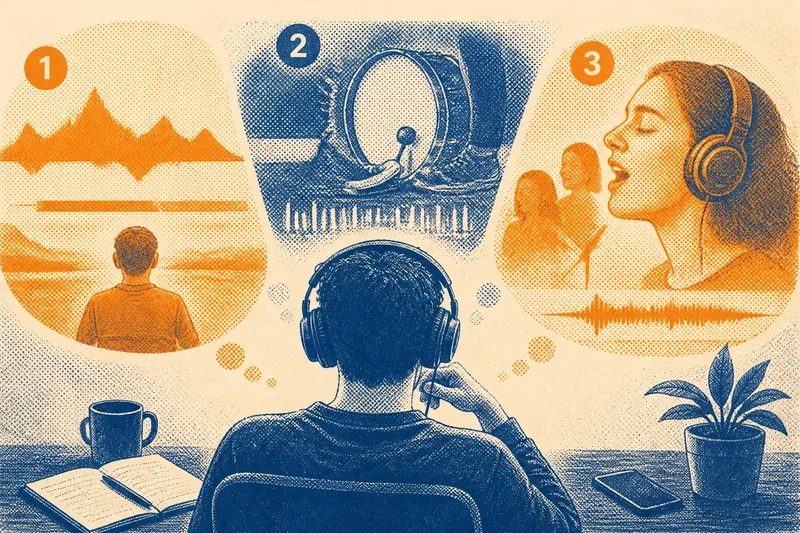
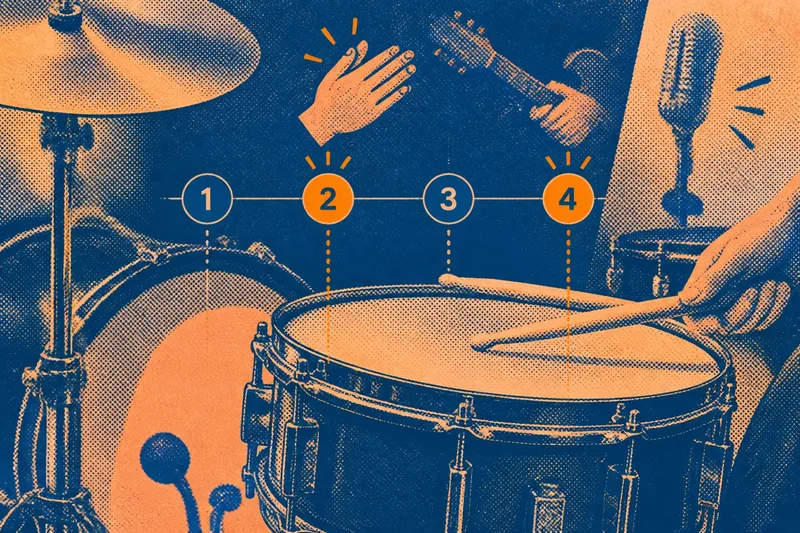
The usual mistake with a familiar track is trying to notice everything at once. You end up hearing the chorus you already know, glancing at your phone, and missing the small changes that make the arrangement move. A three-pass listening plan gives each return a different job: follow the broad shape, attend to the pulse, then stay with one sound source.
Choose a track you can play from beginning to end without needing to search for it. Use the same recording and playback setup each time: a phone speaker, headphones or living-room speakers are all fine. The point is not to compare equipment, but to let your attention change while the music stays constant.
Choose the listening plan that fits your situation
If you have a quiet stretch and want to understand how the track is built, make all three listens complete. The first pass can reveal where sections begin and how the texture changes; the next two can bring rhythm and a chosen layer into focus.
If you are short on time, split the passes across different moments rather than squeezing them into a distracted session. Keep the same track queued and pick up with the next pass when you can listen without another task competing for attention. A partial listen can still be useful, but it will not give you the same view of the whole arrangement.
If you are listening while walking, commuting or doing chores, save the focused passes for a safer, quieter setting. Background listening is good for enjoying a familiar song, but it is harder to follow a subtle entrance or a change in the bass line when your attention has another job. For an at-home session, choose a place where you can sit comfortably and leave the controls alone.
If you are unsure what to listen for, start with the whole rather than a favourite instrument. The broad pass gives you a map, so the later passes have places to land. If you already know the arrangement well, you can spend that first pass noticing how the sections connect instead of trying to identify each one.
Let the first pass trace the track’s shape
Play the song from the opening through the final sound. Do not pause to name every instrument. Instead, notice the large events: where the voice or main melody enters, when the sound grows denser or thinner, whether a section returns, and how the ending behaves.
Listen for changes rather than labels. A verse may feel open because fewer sounds are active; a later section may feel broader because backing voices, percussion or sustained notes join in. You do not need to decide what the section is called. Notice what changes in your sense of space, energy or expectation.
Try to hold a simple route in mind: opening, first main section, change, return, ending. If the track does not fit that route, that is useful too. A long instrumental passage, an abrupt cut or an ending that fades can become an anchor for the next listen.
Say you know a song mostly from its chorus and have never paid much attention to the opening. On this first pass, you might notice that a quiet keyboard pattern appears before the vocal, then continues beneath the fuller chorus. That observation gives you a specific thread to follow later without turning the first listen into a scavenger hunt.
Use the second pass to follow the pulse
On the second listen, let the pulse take the foreground. You can tap a finger lightly on your knee, nod, or simply feel where the music seems to settle. Do not force a tap if the rhythm feels loose or layered; listening for the sensation of movement is enough.
Ask what carries the track forward. It might be a steady drum pattern, repeated guitar strokes, a bass figure, handclaps, or the phrasing of the singer. In some music, the pulse is shared across parts; in other tracks, one source gives the clearest sense of where the beat lands.
Then notice how the pulse behaves across sections. Does the pattern stay steady while the arrangement changes? Does the percussion drop away, or does a repeated figure make a passage feel more urgent? Listen for the effect rather than trying to assign a technical label to every rhythmic detail.
Keep your attention on one question at a time. If you begin tracking the bass, the drum kit and the vocal rhythm together, return to the simplest cue: where does your body expect the next beat? The aim is not to solve the rhythm but to hear how it shapes the track’s forward motion.
Give the third pass to one sound source
For the final pass, choose a single layer before you press play. It could be the lead vocal, bass, drum kit, backing vocals, a keyboard part, a guitar texture or a recurring sound effect. Choose something that has caught your attention, or something you suspect you have been overlooking.
Follow that source from its first appearance to its last. Does it play continuously, or leave gaps? Does it repeat the same figure, change its phrasing, or become easier to hear when another part falls away? A layer can matter through restraint as much as through volume: a brief note at the right moment may redirect your ear.
If the source is difficult to separate, listen for its role instead of trying to identify every note. You might follow the low end beneath the drums, the shape of the backing vocals, or the way a guitar sustains after the singer finishes a line. Headphones can make quiet details easier to pick out, but you do not need specialist equipment or playback software.
Say you chose the backing vocals. You might hear them remain absent through the opening, appear near the end of a vocal phrase, and widen the sound when the chorus returns. The observable result is not a grand discovery; it is a clearer sense of how that layer supports the lead.
Keep each pass focused without making it fussy
A few small choices can protect your attention:
- Queue the same version of the track for all three listens.
- Put notifications out of view or silence them before starting.
- Choose a comfortable playback level rather than turning the sound up to expose details.
- Leave the track playing instead of rewinding whenever something surprises you.
- Keep a short note after each pass, such as “the opening is sparse” or “the bass holds the pulse”.
- On the final pass, commit to one sound source instead of switching targets halfway through.
Notes are optional. If writing interrupts the listening, wait until each pass ends and record one phrase from memory. You are making a trail for your attention, not preparing a review or proving that you heard every part.
It is not worth the effort to chase every instrument name, inspect a waveform or stop the track every time you notice a detail. Those activities can answer different questions, but they change this exercise from listening to analysis. Keep the playback moving unless a technical question is the reason you came back to the track.
What should you do if a detail keeps distracting you?
Should you pause and replay a difficult moment?
Usually, let the track continue and note where the moment occurs. A later pass can bring that passage into focus without breaking the song’s flow. Pause only if your purpose is specifically to examine that brief sound, rather than to follow the full track.
What if you cannot tell which instrument you hear?
Describe the sound by what it does: a low pulse, a bright repeated figure, a sustained chord or a short accent. Instrument names are less useful than noticing when a sound enters, what it supports and how it changes the texture.
Can you use a live version or a remix?
Yes, if that is the version you want to hear, but use the same version for all three passes. A live arrangement or remix may shift the emphasis, so treat it as its own track rather than expecting each layer to match another recording.
What if the song has no clear sections?
Follow changes in density, repetition or mood instead of looking for verse-and-chorus boundaries. A gradual build, a recurring sound or a shift in the vocal can provide the landmarks you need.
Let the final pass leave you with one useful detail
After the third listen, ask what you hear now that you did not notice before. Keep the answer modest and concrete: a backing part enters late, the pulse stays steady through a change, or the ending leaves one sound hanging. You do not need a single interpretation of what the song means.
One familiar track, three focused listens can make the recording feel newly legible without turning pleasure into homework. If you want to return to it again, choose a different layer next time; the main listening plan remains simple, and the detail that catches your ear can change with your attention.